Marilyn Monroe at 100: How the screen icon cemented eternal stardom through portraiture
A new exhibition at the National Portrait Gallery investigates how Norma Jeane became Marilyn Monroe – and captured the attention of the world’s greatest artists
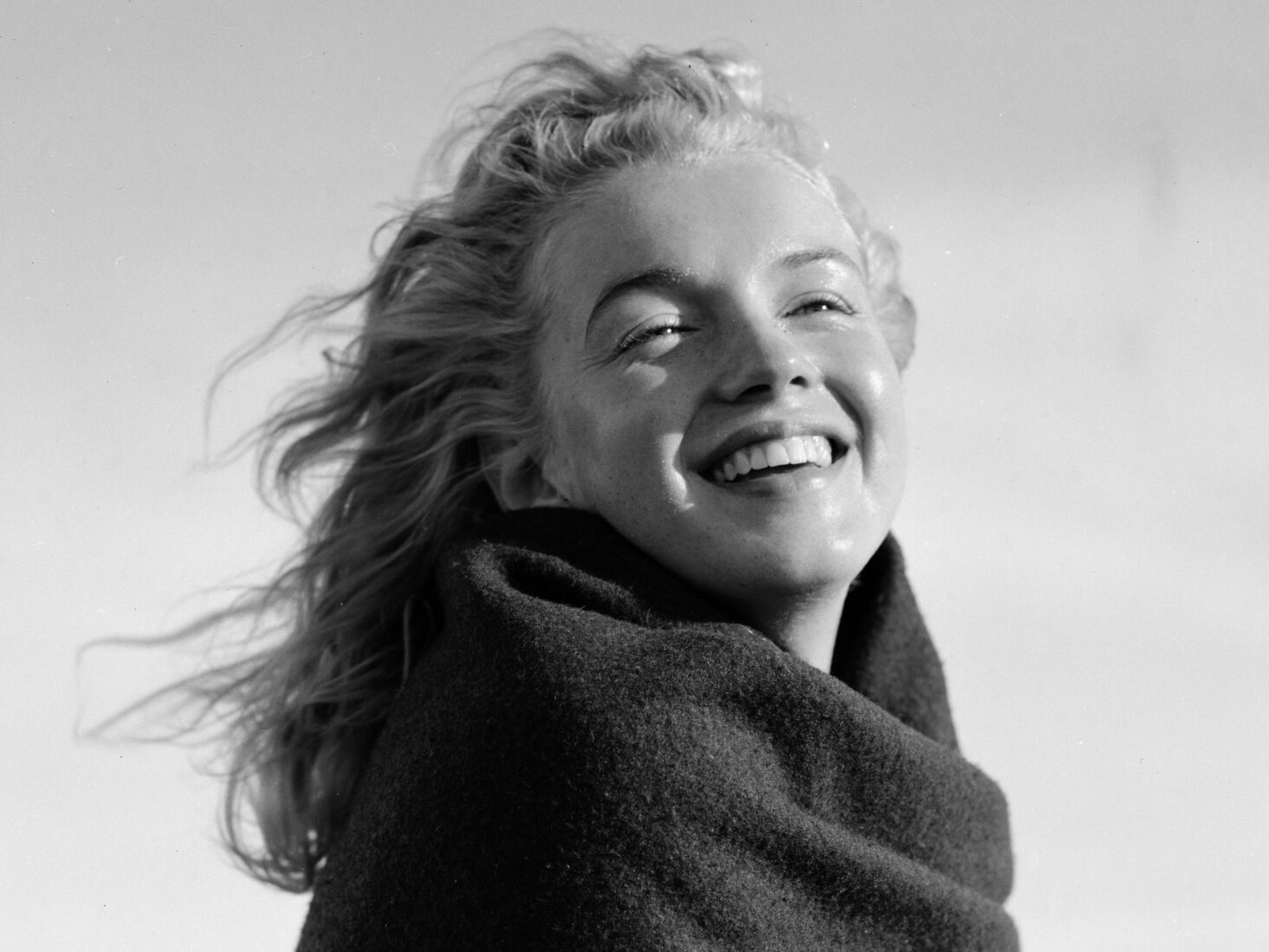
Currently on display at the National Portrait Gallery is a tiny, sepia-faded picture of one of the world’s greatest stars at the tender age of 15. It’s never been shown to the public before, and is what you might now call a selfie (although that term certainly didn’t exist in 1941). She’s smiling, completely naturally, and emanates an aura of vulnerability – something which would underpin much of her life.
“She’s very young, she’s called Norma Jeane and it’s the very beginning of her professional career, as she started to become a model as a teenager,” says senior curator Rosie Broadley, who has spent the past few years of her life dedicated to the NPG’s new retrospective of Marilyn Monroe. “We also have a Warhol [depiction] of Monroe which was made towards the end of his life and career, in the late Seventies, and it’s almost as far away from that little girl as you can possibly get. Through the exhibition, you discover how she gets from there to there.”
Marking what would have been her 100th birthday, Marilyn Monroe: A Portrait delves into the life, work and enduring legacy of one of the most famous women of the 20th century through portraiture. From her breakthrough as a pin-up girl to the height of her Hollywood career, it explores the role she played in her own image making, and how she played muse to a generation of photographers and artists in her lifetime and long after.
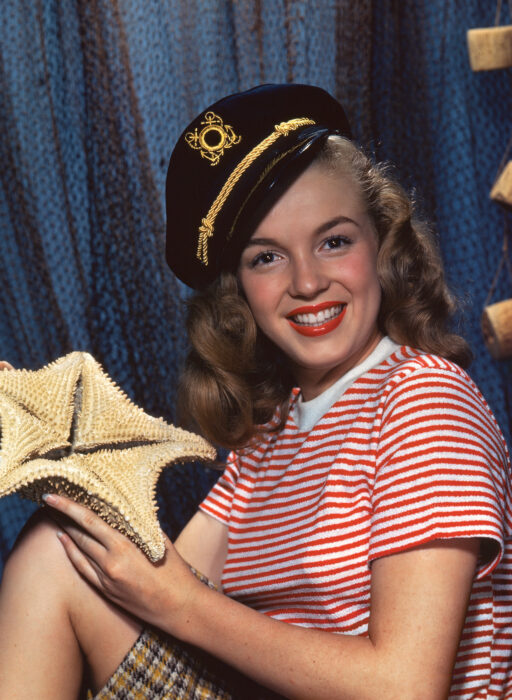
Norma Jeane, 1946. Image: Bruno Bernard/Bernard of Hollywood Foundation.
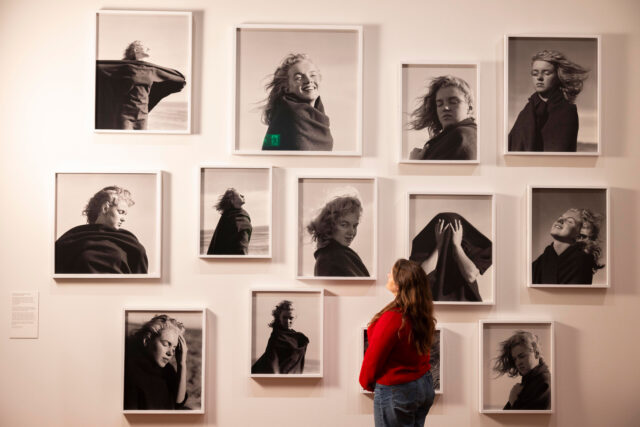
Marilyn Monroe: A Portrait at the National Portrait Gallery
“Many photographers talk really interestingly about working with Monroe; how she was one of the most preeminent subjects they’d had and how she understood the camera, how to pose, and how she understood the technology and techniques behind it,” adds Broadley. “She worked strategically with photographers in making herself a star.”
Born on 1 June 1926 in Los Angeles, her mother Gladys Mortenson worked as a Hollywood film-cutter – a job which involved painstakingly cutting out scenes from film reels. The identity of her father has never been certain, as her mother married an abusive man at the age of 14 but is rumoured to have had an affair. Despite Mortenson’s financial struggle as a single parent, Monroe’s early childhood was relatively happy, before she was placed in the care of various foster families and orphanages as her mother’s mental health started to deteriorate.
It was around this time that she became entranced by the world of cinema. She told Life Magazine in 1962: “I didn't like the world around me because it was kind of grim [...] When I heard that this was acting, I said that's what I want to be [...] Some of my foster families used to send me to the movies to get me out of the house and there I'd sit all day and way into the night. Up in front, there with the screen so big, a little kid all alone, and I loved it.”
In a bid to escape an orphanage shortly after her 16th birthday, the first of Monroe’s three marriages was to James Dougherty – her 21-year-old neighbour who joined the Merchant Marines during the Second World War. The couple were mismatched – Monroe once said she was “dying of boredom” with him – and it was while working at a munitions factory that she caught the eye of documentary photographer David Conover, who told her she could be a model.
Monroe signed with Blue Book Model Agency in August 1945 and was deemed more suitable for pin-up shoots than high fashion. It was here that she transformed into the Marilyn Monroe we know today, dying her hair platinum blonde and leaving the name Norma Jeane – and practically everything it stood for – behind. Monroe quickly became one of the agency’s most ambitious and hard-working models; by early 1946, she had appeared on more than 30 magazine covers for Pageant, U.S. Camera, Laff, and Peek. It proved to be a landmark year personally too; she divorced Dougherty, signed a contract with Hollywood film studio Twentieth Century Fox, and started collaborating with famous photographers such as Andre de Dienes, Joseph Jasgur and Bruno Bernard.
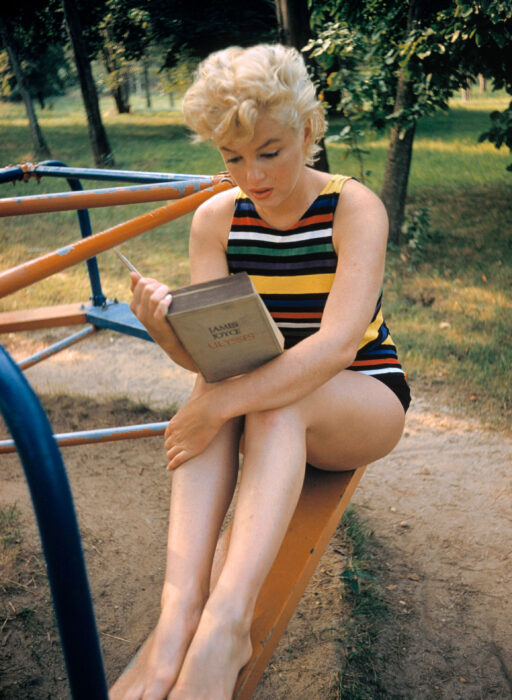
Marilyn Monroe, Mount Sinai, Long Island, 1955. Image: Eve Arnold/Eve Arnold Estate
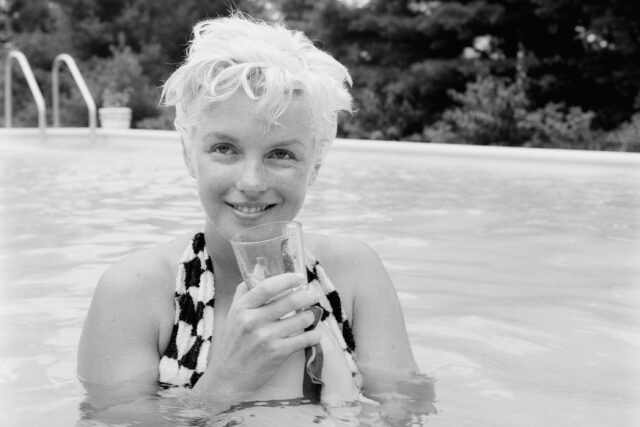
Marilyn Monroe, 1955. Image: Milton H Greene/MHG Collective, LLC
Bernard’s pin-up portraits could be credited with launching Monroe’s film career. Often photographed in swimsuits in order to elongate her legs, Bernard claimed her ‘girl-next-door’ quality and sex appeal was her one-way ticket to Hollywood. Jasgur, who often worked with Monroe in the Hollywood Hills and Malibu, once said: “More than any woman I’ve ever met or since, she was totally comfortable in front of the camera. She was relaxed, no trace of self-consciousness.”
On display as part of the exhibition, what followed were some of the most extraordinary photoshoots of Monroe’s life. “The very first photographer we chose to work with was Phillipe Halsman. He was an amazing photographer and we loved the Jump series she made with him because it’s so joyful,” says Broadley. “That was one of Monroe’s amazing abilities: no matter what was happening in her life she was always able to express this amazing sense of joy. It doesn’t seem forced and it’s always there, even in spite of the changes.”
There are also photographs by artists who went on to become Monroe’s close friends, such as Eve Arnold – one of the handful of women to photograph Monroe – Milton H Greene, and Cecil Beaton, whose own career was taking off at the time. Monroe sat for Beaton in his suite in New York’s Ambassador Hotel and, while it was their only collaboration, both Monroe and Beaton considered it to be a career highlight. He said: “She romps, she squeals with delight, she leaps on to the sofa [...] It is an artless, impromptu, high-spirited, infectiously gay performance. It will probably end in tears.”
Tears and tumultuous times, of course, did underscore much of Monroe’s life. During the early 1950s she married for the second time, this time to high-profile baseball star Joe DiMaggio who was jealous, controlling and abusive. She was also filming The Seven Year Itch; although the film was shot in Hollywood, it created one of the most recognisable depictions of 20th century New York.
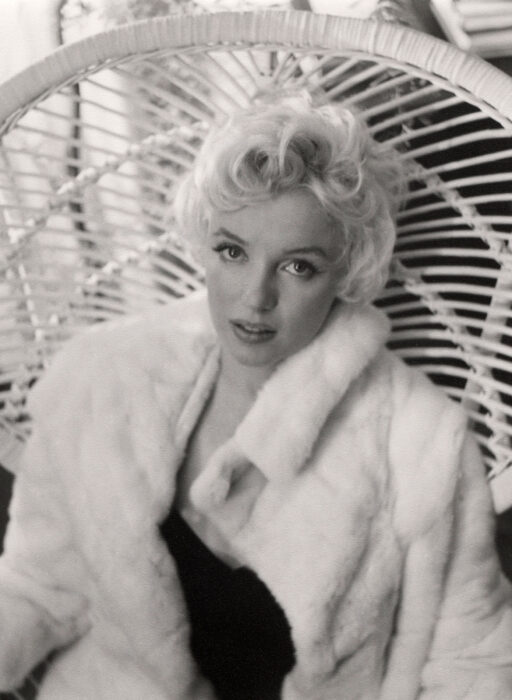
Marilyn Monroe, 1956. Image: Cecil Beaton/National Portrait Gallery
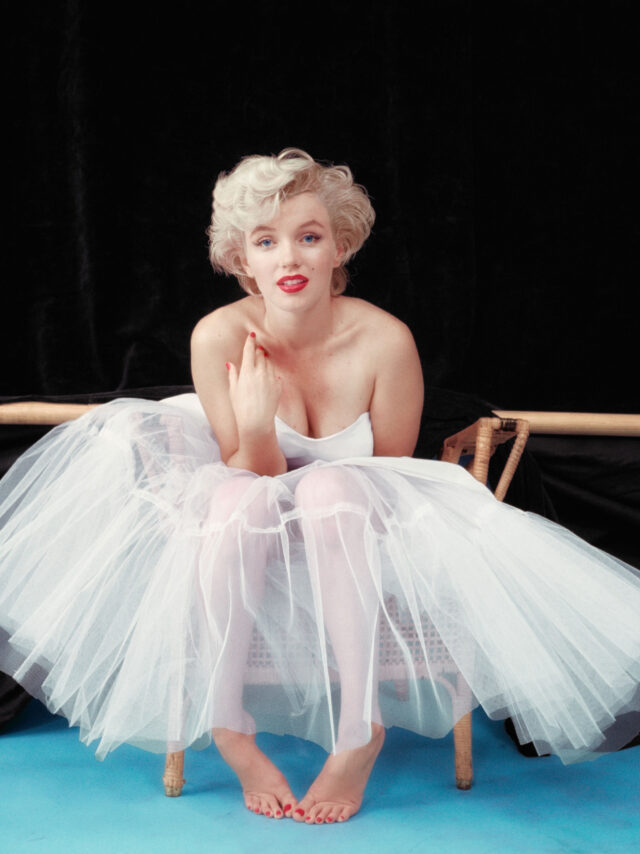
Marilyn Monroe, Ballerina Sitting, 1954. Image: Milton H. Greene/MHG Collective, LLC
On a mission to stir up publicity for the film, the studio staged a photoshoot at 1am on Manhattan’s Lexington Avenue, which saw Monroe stand on a subway grate with air blowing up the skirt of her white dress. Sam Shaw’s shoot lasted hours and attracted thousands of spectators; this photograph, scene, and film became one of Monroe’s biggest commercial successes. And while her marriage to DiMaggio broke down, her Hollywood career couldn’t have been flying higher.
In 1955, she moved to New York, founded her own production company and starred in the Bus Stop (1956), following success in Gentlemen Prefer Blondes and How to Marry a Millionaire (both 1953). After a short but intense affair, she married Arthur Miller and converted to Judaism. The exhibition includes Shaw’s images of the couple in their rural home in Connecticut, where Monroe is reported to have said, “We’re so congenial. This is the first time I’ve been really in love,” and, “Since we’ve been married we lead a quiet and happy life”. It is during this period that Monroe is thought to have experienced stability perhaps for the first time in her life – and the portraits reflect that.
“The other strand of this exhibition is the portraits that were made of her by artists. When I started working on this exhibition, I assumed they were all posthumous – such as Warhol’s, which is the [most] famous one – but actually I discovered artists were already depicting Monroe in paintings while she was still alive,” says Broadley. “[It] attests to the fact that she was a preeminent cultural figure.”
By the early 1960s, Monroe was unravelling; she frequently skipped work – the 1960 film Let’s Make Love was delayed because of her sporadic absences, and flopped at the box office – and her health and marriage was failing.
In the last few weeks of her life she was photographed by Bert Stern, George Barris and Allan Grant. These portraits of her smiling, almost effortlessly, became even more poignant when the world learned of her death in August 1962, aged just 36, ruled a suicide caused by a barbiturate overdose. The news reverberated around the world, and the shock acted as a catalyst for the production of numerous posthumous portraits by artists on both sides of the Atlantic.
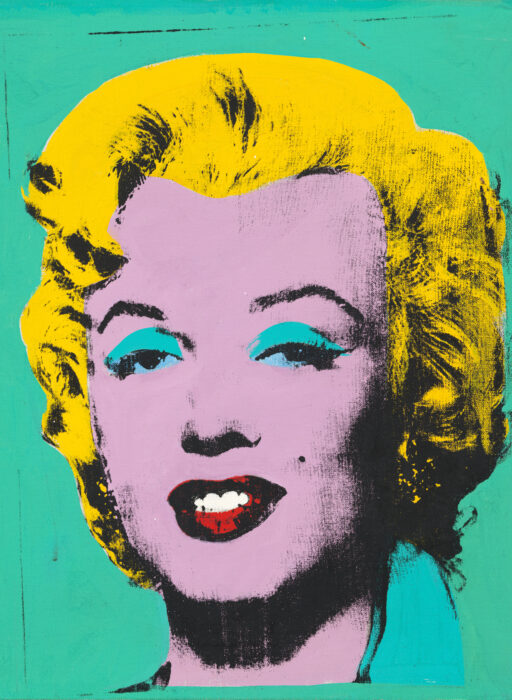
Green Marilyn, 1962, by Andy Warhol. Image: The Andy Warhol Foundation for the Visual Arts/Licensed by DACS, London, National Gallery of Art, Washington/Gift of William C. Seitz and Irma S. Seitz
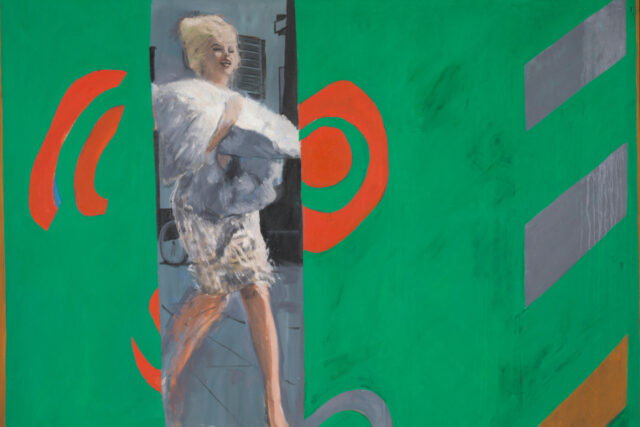
The Only Blonde in the World, 1963. Image: Pauline Boty/The estate of Pauline Boty/Tate
British pop artist Pauline Boty, a devoted fan, worked through her grief in paintings including The Only Blonde in the World (1963), which is on display at the National Portrait Gallery. Also shown are Warhol’s iconic screen prints, which he based on a still taken to promote the film Niagara in 1953, and isolate Monroe's face against a field of gold, enshrining her like a Byzantine saint. A fitting homage to a saint of cinema.
Commenting on her decision to include three personal objects of Monroe’s in the exhibition – two dresses and a pair of shoes – Broadley says: “Even though this exhibition is about image and image-making, we must remember that behind these images was a real woman with a beating heart.” Rather serendipitously, on the opposite wall reads a 1980s quote from Bert Stern who, 20 years after Monroe’s death, said: “She is gone but she is everywhere.”
Marilyn Monroe: A Portrait is open at the National Portrait Gallery until 6 September 2026, visit npg.org.uk
Read more: Moss & Freud: The true story behind the unlikely friendship between Kate Moss and Lucian Freud